The EU Bans a "Forever Chemical" in Clothes, Shoes and Food Paper
A week from now, the EU starts restricting a "forever chemical" in clothes, shoes, cosmetics and food paper. If you sell any of them, ask your suppliers for paperwork this week.

Kaan Salli
5 October 2026
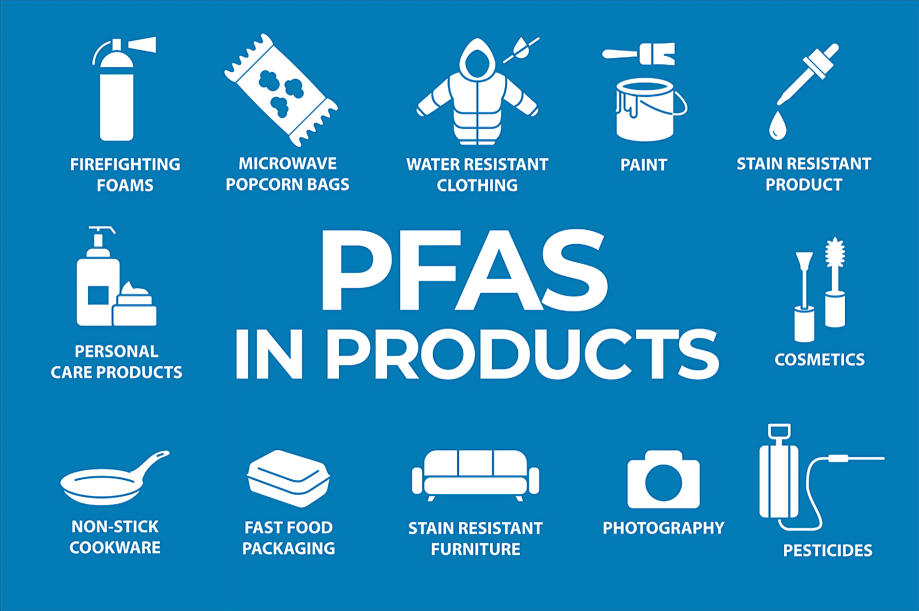
Most rain jackets keep you dry with a coating, and that coating has to come from somewhere. For years, one answer was a group of PFAS chemicals that barely break down once they're out in the world, which is why people call them forever chemicals.
One of them, PFHxA, now has a date. The EU restriction takes effect in a week, and it covers a lot more than rain jackets.
What Actually Happened
Commission Regulation (EU) 2024/2462 was published in September 2024. It added PFHxA and related substances to the REACH restriction list (Annex XVII, Entry 79). The main date is 10 October 2026.
From that day, these consumer products can't carry PFHxA above the limits: textiles, leather and furs in clothing and accessories, footwear, paper and cardboard that touches food, mixtures for consumers, and cosmetics. The limit is 25 parts per billion for PFHxA and its salts, and 1,000 parts per billion for related substances. Other textiles follow on 10 October 2027.
This is a restriction on one group of PFAS, not a ban on all of them. The Commission's reasoning was that textiles are a major emission source and that alternatives for water-repellent finishes appear to be available.
Responsibility sits with suppliers and importers. If you import goods yourself, the law treats you as the one placing them on the EU market.
Stock that was placed on the market before 10 October is exempt. Under the regulation, the supplier has to be able to show that it was. Two industry sources describe it this way, and I'd still confirm it against the legal text before relying on it.
Why It Matters For Your Shop
A restriction written in parts per billion reads like a problem for chemists. For a small shop it comes down to one thing: can you prove what you're selling meets the limit?
If you buy from a wholesaler or a brand, they carry most of the burden. You still sell the product. A customer or an inspector will ask you first.
If you import directly from outside the EU, the burden is yours. That includes the independent owner who orders outdoor wear from a factory, and the small webshop that ships shoes from a supplier abroad.
Cosmetics and food-contact paper make it wider than fashion. A bakery or café that buys greaseproof wrapping, or a pharmacy that stocks creams, sits in scope too.
Your staff will feel it in the small things. Someone will need to find the declaration, answer the question at the counter, and know who to call.
My Honest Take
I like the goal. Nobody needs a waterproof coating that outlives the jacket by a few centuries.
I'd have liked to see more help for small buyers. A big brand has a compliance team and lab contracts. A shop with 3 employees has an email address and a polite tone.
The upside is that the paperwork is simple to ask for. Suppliers who can't answer in a week are telling you something about how they run.
I'd also say plainly that parts of this are still being worked out in practice. Check the details for your product category before you assume you're covered.
What I'd Do Next
Send your suppliers one email this week. Ask for a written statement that the products comply with Regulation (EU) 2024/2462, and for the lab test report showing results against 25 ppb and 1,000 ppb.
For stock you already hold, ask for proof of when it entered the EU. Keep the answers in a folder you can open in 2 minutes.
If you import yourself, ask your factory for a finishing declaration and a written rule that no PFAS-based finishes may be used.
A label that says "waterproof" is a claim. A test report is evidence.
Sources: Bureau Veritas — EU REACH: Restriction of PFHxA, TÜV — Regulation (EU) 2024/2462: Restriction on PFHxA, its salts and related substances, Collective Studio — EU PFAS Rules for Clothing: The PFHxA Limit from 10 October 2026
© Copyright Kaan Salli, 2026. All rights reserved.